Summary
Galactic archaeology, stellar populations and machine learning applied to astronomical data.
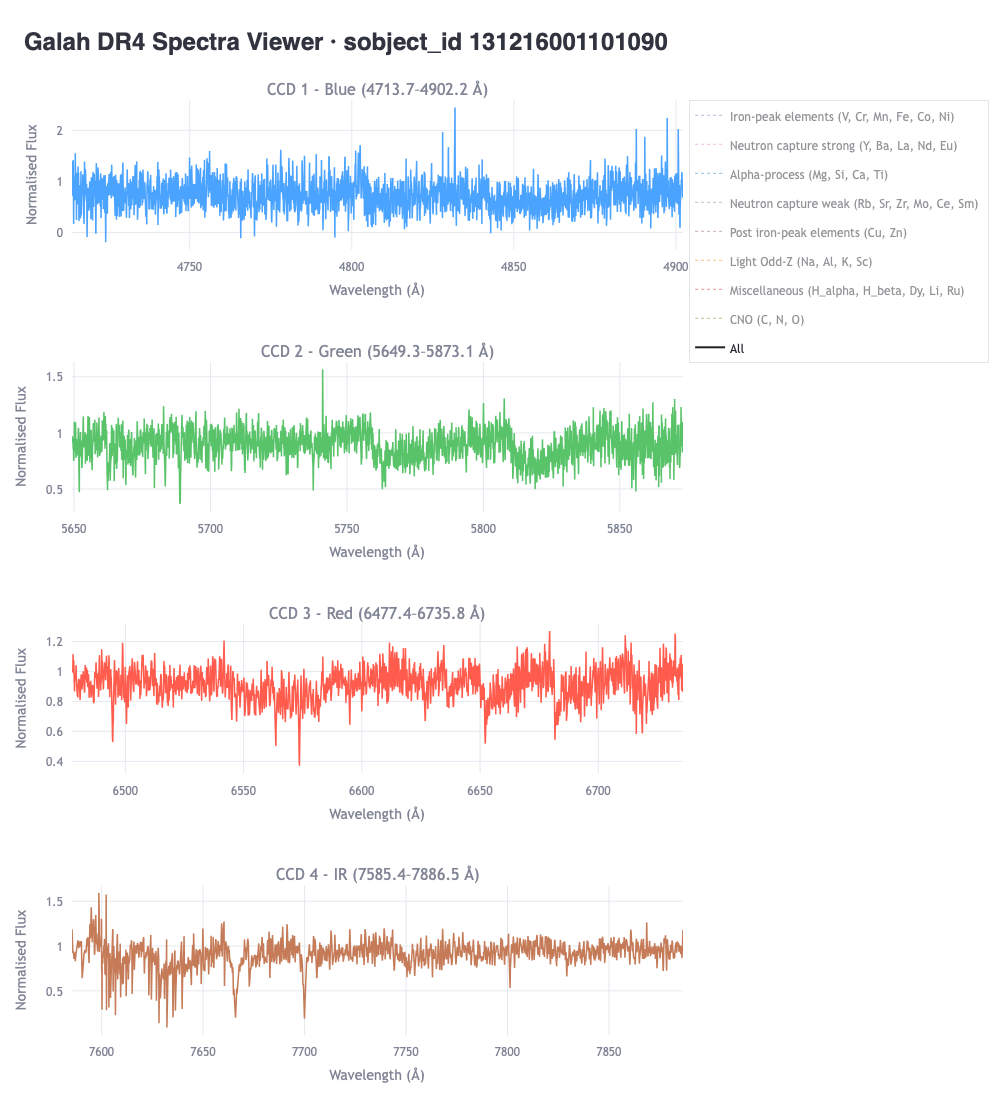




My work is at the intersection between computational methodsand** astrophysical problems**, focusing on galactic archaeology, stellar populations and the Milky Way structure.
Areas of Interest
Astrophysics
- Galactic archaeology and stellar populations
- Structure and chemical evolution of the Milky Way
- Analysis of large volumes of astronomical data
Computer Science
- Scientific computing and data pipelines
- Machine learning applications in astronomy
- Reproducible computational workflows
Projects
- Gaia Data Anomalies Detection— Building a machine learning pipeline to find anomalous stellar objects in Gaia and in complementary surveys.
- Understanding Matter Dark from Extragalactic Shocks— Testing the accuracy of a Monte Carlo method to date collisions of galaxy clusters, such as indirect proxy for dark matter behavior.
- Simulating Satellite Impact on Astronomical Observations— An AI algorithm to remove artificial satellite tracks from astronomical images, recovering 99.7% of lost information.
- ReLaTeX: LaTeX Class for Academic IFF Works— The class
ifftese.clsand the packagemacros.sty, automating compliance with ABNT standards in IFF academic works.
Readings
- Journal Clubs— Curated list of articles discussed in group (MWBR and ENGCOMP), with each discussion.
- Foundations of Chemical Evolution of the Galaxy (W. Maciel, IAG/USP) — reference book of my area, distributed free of charge by the author.
Automatic translation notice
This page was automatically translated from Portuguese using the LibreTranslate-based automated translator implemented in
tools/translate_quartz.py(it preserves wikilinks, embeds and proper names via positional splitting). Machine translation may contain inaccuracies — the original Portuguese version is the authoritative source.